


Although flying is thrilling, nothing throws a wrench into a smooth flight like a misunderstanding of airline baggage rules. Between strict carry-on size regulations and confusingly complex checked baggage limitations, airlines have their own unique airline luggage policies. Failure to comply with these policies may result in an unexpectedly high fee. This guide clarifies airline baggage policies and explains how to pay for costs associated with baggage, as well as how to avoid unexpected baggage charges.
There is a significant benefit to travelers who are aware of airline baggage policies and fees before heading to the airport. Overall, whether you fly frequently or not, understanding how carry-on size restrictions, checked baggage limitations, and airline luggage policies work in conjunction to provide you with the best experience during your travels is essential.
Airline rules for baggage are guidelines established by an airline that outline what can be packed, the maximum allowable weight of your packed items, and where the bag must be placed. The purpose of an airline's baggage rules is to ensure passenger safety, operational efficiency, and fairness among all passengers.
Airline baggage rules are generally grouped into three major types: carry-on baggage, checked luggage, and special baggage items. Each type will have its own baggage policy, created by the airline, that specifies the maximum size and weight of an individual bag, as well as any applicable fees. Failure to adhere to airline baggage rules may result in increased baggage fees, a requirement to check the bag, or, in extreme cases, denial of boarding due to excessive weight.
When travelers are aware of these rules before booking their travel, it allows them to pack intelligently and stay within the limits of checked baggage.
Baggage rules regarding carry-on sizes are among the strictest in the airline industry. Many airlines enforce strict limits on the size of carry-on bags to ensure that bins can close properly and that aircraft remain balanced. Generally, a carry-on bag can fit in an overhead compartment or under the seat. Most airlines have established a carry-on size limit of approximately 22 x 14 x 9 inches (though some do vary slightly), as well as personal items such as a backpack or handbag, which must also comply with the airline's baggage policy. If a traveller does not adhere to the carry-on size specifications established by the airline, they may be required to check their carry-on bag at the gate, often incurring an additional fee (which the airline generally indicates on their website, but is not always clearly communicated at the airport).
The luggage limits for checked luggage specify the number of bags that can be scanned and the maximum weight each bag can hold. Most major airlines allow one or two checked bags to be carried, depending on ticket class, destination type, and the airline's baggage policies.
Most of the time, the maximum weight limit for checked luggage is 50 lbs. If your bag exceeds the weight limit, you will incur an overweight baggage fee, which ranges from reasonably priced to extremely high. Airline baggage regulations surrounding this matter are stringent because overweight baggage increases operating costs and safety hazards.
Knowing your airline's baggage policies before you begin packing will help you avoid having to rebag your items just before your flight or paying excessively high fees when you arrive at the airport to check in.
Airlines are free to create their own rules for baggage policies, resulting in significant variations in policies among individual carriers. Generally, low-cost carriers impose stricter restrictions on the size of carry-ons and charge for checked bags. At the same time, premium airlines offer more generous allowances than those provided through check-in.
Airlines also follow different types of baggage policies when operating internationally as opposed to domestically. For example, some may use weight-based or piece-based policies.
Since airlines' baggage policies can change frequently, travelers should check with their specific airline to obtain the most current information on their baggage allowance before traveling.
By understanding what baggage fees are and their implications for travelers, airlines can help travelers save money by avoiding extra costs. Baggage fees are assessed by airlines based on their policies regarding checked baggage, which include the limits on the number of bags per passenger, as well as the weight limit for each bag, without incurring extra fees for being overweight.
Most airlines' policies regarding luggage allow for a first checked bag at no additional cost for most economy class tickets; however, the first checked bag(s) will have an extra fee if the passenger has booked an economy class ticket that does not include a free checked bag. Subsequently, passengers who have booked economy class tickets with multiple checked bags are responsible for paying additional fees for each subsequent bag checked in after the first.
Another factor that typically results in larger baggage fees is when luggage exceeds the weight restriction. Baggage fees incurred for overweight luggage can be extremely high, and in some cases, far exceed the cost of the ticket itself.
Airline regulations regarding baggage are primarily designed to encourage passengers to pack light. By understanding the baggage fees, passengers can decide whether they would like to pack less or opt for a higher-priced ticket that includes one or more free checked bags.
Excess baggage is among the reasons travelers end up paying a premium at their airport. Many airlines have strict weight limits for the amount of luggage a traveler may carry, and exceeding the limit by even 1 pound can result in a charge.
Here are some ways to avoid paying for excess baggage:
By being aware of an airline's regulations in advance of departure, you can save yourself money on unscheduled expenses and not have to worry about your luggage while on vacation.
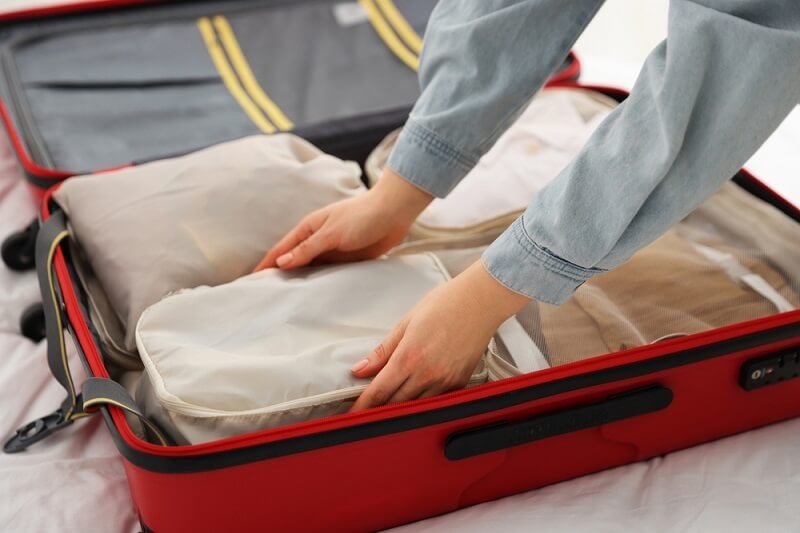
In most cases, a decision must be made between using carry-on luggage versus checked luggage, which can depend on how you typically travel and the airline's baggage policy. Most airline carry-on size regulations have size limits that allow lighter packers the possibility of avoiding baggage claim; however, checked luggage size limits provide more allowance and freedom in packing for longer trips. As a result, the strict enforcement of the baggage policies by airlines leads to oversized carry-ons often being checked at check-in, and in some cases, they charge additional luggage fees at the airport gate. Travelers need to be aware of both the size limitations for carry-on luggage and the size restrictions on checked luggage in order to select the most cost-effective option.
The baggage rules of international airlines can be slightly stricter yet also more accommodating than those of domestic airlines. Some international airlines may have higher checked luggage allowances than others. Moreover, airlines may also have strict limits for the size of carry-on bags, based on the aircraft type, for all carriers, regardless of the distance traveled.
Overweight charges for baggage on international flights tend to be higher than those on domestic flights; therefore, travelers should review an airline's baggage policy before departure. Reviewing the baggage rules for both outbound and inbound flights may help ensure compliance with the guidelines of two different airlines.
The most effective way to comply with airline baggage regulations without difficulty is through the use of "smart packing" methods. To begin, ensure you understand your airline's carry-on size regulations and checked baggage allowances. Also, roll your clothing flat, use compression bags, and distribute your weight evenly amongst all of your checked-in bags. Place all monetary and essential items within an airline's defined carry-on luggage policies in the carry-on bags. These techniques help mitigate the risk of having an overweight suitcase and keep travelers within the airline's approved carry-on luggage limits.
The continued evolution in the airline industry regarding airline baggage policies is driven primarily by fuel prices, as well as environmental concerns and passenger requests for more sustainable services. Numerous airlines have tightened their carry-on size restrictions and revised their checked baggage policies to adopt a dynamic pricing approach.
Going forward, travelers can expect stricter enforcement by airlines of their baggage policies, which will include higher penalties for excess baggage weight.
Knowledge is the best way for travelers to protect themselves from unforeseen changes in airline policies.
All travelers must be aware of an airline's baggage rules. Each airline has different rules for each category of luggage (carry-ons, checked bags, etc.), as well as fees associated with additional luggage. Understanding these rules will enable a traveler to make informed decisions about how much and what to pack. When organized correctly, airline baggage rules become tools for efficient travel, not impediments to it.
The rules for carry-on baggage on airlines specify size and weight limits for each passenger. Baggage exceeding these limits must be checked at the time of boarding, and an additional charge will apply. However, checked-in baggage is subject to airline regulations regarding size and weight.
The regulation of checked-in baggage for airlines is based on the airline's baggage policies and restrictions, which vary depending on the route of travel, class of ticket purchased, and other factors. On average, the checked-in weight limit for domestic flights is 50 lbs; however, an additional charge may apply for excess or overweight luggage on many airlines.
Almost all larger airlines provide clear information regarding their baggage policies and fees, although the amounts vary significantly between routes, fare types, and different airlines.
If a passenger checks luggage that exceeds the weight limit, they will be charged an excess baggage fee. Many airlines have very specific and restrictive baggage policies, with some charging a significant fee for excess weight over their limit.
It is possible that any airline will alter its baggage policy after a consumer purchases an airline ticket. Travelers should always verify an airline's baggage policies before traveling to avoid any unexpected fees at the airport.
This content was created by AI